
- AdTech
- AI
- MarTech
- Software Engineering
Sanddev Best Tech Stack – Technologies We Built With
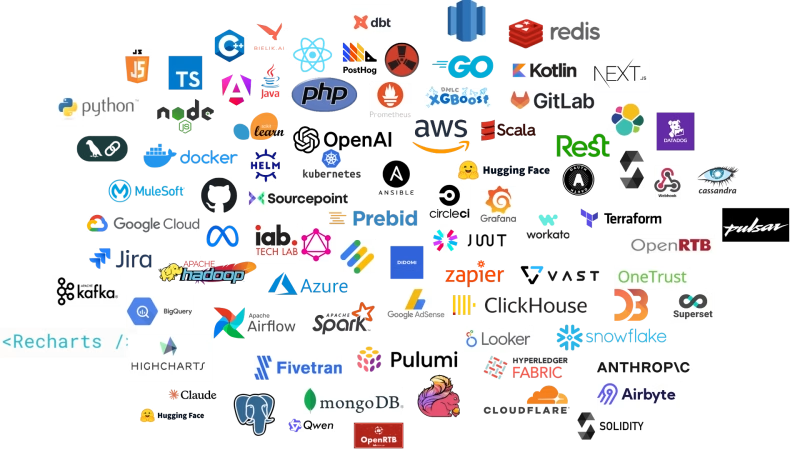
Most agency websites answer “what do you work with?” with a wall of logos. Ours did too. So here is the same wall, written out.

Article partially generated by artificial intelligence.
TL;DR: Marketing Cloud support ends in December 2026, about ten weeks away. SAP is steering customers to Emarsys, renamed SAP Engagement Cloud in February 2026, but enterprise marketing migrations usually run six to nine months. At this point the question is no longer how to finish a migration. It is which parts to finish first. This guide covers the dates, the data you have to get out, the options, what it costs, and a ninety-day sequence.
Yes. SAP confirmed it will not continue development of SAP Marketing Cloud beyond 2026, and the sunset has been discussed openly in SAP’s own customer community since 2023. Implementation partners across Europe describe the same end point, independently of each other.
What SAP has not done is publish a loud, dated end-of-life notice of the kind it issues for on-premise products. There is no countdown banner and no single announcement page. That is why teams are still asking this question in October 2026: the deadline is real, but it arrived quietly. If you are waiting for an email from SAP to start the project, you are waiting for something that is not coming.
December 2026. Every independent source that has examined this gives the same month, and none gives a specific day, because SAP has not published one publicly.
Treat your practical deadline as 1 December 2026, not 31 December. Nobody cuts over a marketing platform in the last three weeks of December. That window belongs to peak-season recovery, year-end campaigns and the production freeze most enterprises run through the holidays. If your cutover is not live by the end of November, it is a January project running on unsupported software.
Consolidation. SAP ended up with two engagement platforms after acquiring Emarsys in 2020, and it chose the acquired one. In February 2026 it renamed Emarsys to SAP Engagement Cloud, dropping the word “marketing” so the product could span marketing, commerce and service in one story.
The reasoning matters because it tells you where the investment is going. SAP is now selling engagement as an AI-led, real-time capability rather than as campaign management.
Is SAP Engagement Cloud the same thing as Emarsys? Same product, new name, plus a new tier. On 19 February 2026 SAP renamed SAP Emarsys to SAP Engagement Cloud and introduced an enterprise edition alongside it. The existing product became the “Emarsys edition.”
This was a rename, not a replatform. The product, the engineering team and the infrastructure stayed where they were. For existing Emarsys customers, features, APIs, integrations and contract terms are unchanged until renewal. What changes is the name on the invoice, in the documentation and inside the interface.
The enterprise edition is the genuinely new part. It adds governance for organisations running multiple brands, regions and teams — which is exactly what large SAP Marketing Cloud customers tend to need, and exactly what they tend to be quoted for.
So when a proposal says “SAP Engagement Cloud,” ask which edition it means. The gap between the two is where the budget surprise lives.
Not for a complete one. In the platform moves we have run, an enterprise marketing migration takes six to nine months end to end, and most of that time is not the platform build. It is data cleansing, consent re-mapping, integration rework, and rebuilding journeys that were never documented in the first place.
With roughly ten weeks left, the realistic goal is a sequenced partial cutover: get the campaigns that generate revenue and the records that carry legal obligations onto the new platform first, and accept that the long tail follows in Q1.
The step teams consistently underestimate is suppression. Budget a week for the list that breaks quietly during a move, because nobody ever does.
You keep running SAP Marketing Cloud unsupported, at your own risk. Three things then compound. No fixes, so small faults accumulate with no route to resolution. No patches, so every newly disclosed vulnerability stays open indefinitely. No roadmap, so your stack stands still while the market moves.
Sentiment was already lukewarm before the sunset: SAP Marketing Cloud scores 5.2/10 on TrustRadius, with a 2.0/10 likelihood-to-recommend.
The deadline is not the only risk. The consent records that have to survive the move are the part regulators ask about first, and an unsupported platform is a poor place from which to answer a subject access request.
This is the question that belongs at the top of the list and usually is not on it at all.
End of support does not mean the platform switches off on day one. It means you lose the safety net at precisely the moment you are most likely to need it. Export while the platform is still supported – while you can still raise a ticket if an export job fails at two in the morning.
Four categories, ordered by how painful each is to lose:
The legal basis for every contactable record, with timestamps and source. These are not reproducible. If they do not arrive intact on the new platform, the affected contacts are not legally contactable, and no amount of engineering fixes that afterwards.
Global unsubscribes, hard bounces, complaint records. Losing these does not break a campaign in any visible way. It sends mail to people who explicitly asked you to stop, which is a complaint and a deliverability problem arriving at the same time.
Opens, clicks, purchases, scores, engagement timestamps. Most target platforms will accept a flat import. Very few will accept it in the shape SAP exports it, so budget for transformation rather than transfer.
This is the category that does not export at all. Segmentation rules and journey conditions have to be read, understood and rebuilt by hand on the target platform. It is the single most common reason migration estimates double, and the reason documentation takes longer than the build.
Export in that order. If the project runs out of runway, the first two are the ones you genuinely cannot recreate.
You are not short of candidates. Chiefmartec’s 2026 landscape counts 15,505 martech products, with the marketing automation and campaign management category still growing at 5.9% year over year. The problem is not finding a platform. It is choosing one in ten weeks without making a decision you will be unwinding in 2028.
Four realistic paths:
| PATH | BEST FIT | REALISTIC TIME TO LIVE | WHAT TRANSFERS CLEANLY | THE CATCH |
| SAP Engagement Cloud, Emarsys edition | B2C retail and ecommerce already inside the SAP estate | Eight to sixteen weeks | Contacts, commerce events, existing SAP connections | It is a different data model, not an upgrade path. Journeys are rebuilt, not moved |
| SAP Engagement Cloud, enterprise edition | Multi-brand or multi-region groups needing governance | Three to six months | The same as above, plus brand and region hierarchy | Priced and scoped separately. Confirm which edition a quote refers to |
| A non-SAP platform | B2B, or anyone whose SAP dependency is thinner than it looks | Three to nine months | Contacts and consent, if you export them properly | Every SAP-native integration becomes a project of its own |
| Keep the data, replace the layer | Teams whose real asset is the customer data, not the campaign tool | Four to nine months | Everything, because you control the schema | Only pays off at steady volume, and it is not a ten-week answer |
SAP will point you at Emarsys, so we tested the successor most teams evaluate first against the alternatives.
A forced migration is also a chance to ask the bigger question, and deciding whether to replace or rebuild deserves an honest hour before the licence is signed.
No blog post can quote you a figure, but you can size it yourself from four variables, and most teams only budget for the first one.
The difference between what you pay SAP today and what the target platform costs at your contact volume. This is the number in every proposal, and it is the least likely to decide whether the project succeeds.
Export, cleansing, de-duplication, consent re-mapping, transformation into the target schema. In the migrations we have run this is routinely the largest line, and it scales with how messy the data is rather than with how many contacts you have.
Count every inbound and outbound connection: CRM, ecommerce, service desk, analytics, data warehouse, consent management platform. Each one is a small project. SAP-native connections that worked out of the box are the ones that hurt most on a non-SAP target.
Count your live journeys and multiply by how well they are documented. Undocumented journeys have to be reverse-engineered from the running system before they can be rebuilt, and that has to happen while the system is still supported.
The useful rule: the licence is the number in the proposal, and the data and integration work is the number that decides whether the project lands on time.
A sequence that fits the time actually remaining, rather than one that assumes you started in spring.
List every live journey, every integration, every automated export and every report someone depends on. Rank journeys by revenue. Most teams discover at this point that a quarter of what is running is nobody’s and can simply be switched off.
Pull consent records and suppression lists first, then interaction history. Verify the exports by reconciling counts against the source, not by confirming the file downloaded. Do this while support still exists.
Rebuild only the revenue journeys and the compliance-bearing flows on the target platform. Everything else waits. Resist the urge to improve journeys during the rebuild — that is a Q1 project, and mixing it in here is how deadlines slip.
Move the critical path live, run both systems in parallel for at least one full campaign cycle, and keep SAP Marketing Cloud as a read source rather than switching it off.
Migrate the long tail in Q1 on an unsupported but read-only platform. That is an acceptable risk. Carrying consent records on an unsupported platform is not.
Sanddev is an independent migration partner, not a reseller with one licence to push. We map your campaigns and data flows, run the fit-gap analysis, sequence the cutover around the window you actually have left, and handle the technical build.
If you want the operational version, how we run a platform migration and the integrations under it. Book an assessment before “plenty of time” becomes “an emergency.”
SAP Marketing Cloud is SAP’s cloud platform for segmentation and campaigns, now being phased out.
SAP Emarsys is SAP’s omnichannel engagement platform and the recommended successor.
SAP Engagement Cloud is the February 2026 rebrand of Emarsys, covering marketing, commerce and service.
The Emarsys edition is the existing product under a new name. The enterprise edition adds governance for organisations running multiple brands, regions and teams, and is quoted separately.
SAP has not published an extended support programme for SAP Marketing Cloud. If continuity matters to you, raise it with your account team in writing and plan as though the answer is no.
No. Salesforce Marketing Cloud, HubSpot, Adobe Marketo Engage, Klaviyo and Braze are all viable, and the right answer depends on how deep your SAP dependencies actually run.
EOM (End of Maintenance) means the date after which no patches, fixes or support arrive.
A fit-gap analysis is a comparison of your setup against a target platform, flagging what transfers and what needs rebuild
The risk of unsupported software is unpatched vulnerabilities, GDPR exposure, downtime and zero vendor accountability.
No. Contacts and commerce events transfer with effort, but segmentation and journey logic use a different data model and are rebuilt by hand.
Consent and permission records, then suppression and bounce lists. Those two cannot be recreated if they are lost. Interaction history and journey logic come after.
Six to nine months end to end for an enterprise rollout, with data preparation rather than platform configuration taking the majority of that time.
Most agency websites answer “what do you work with?” with a wall of logos. Ours did too. So here is the same wall, written out.

SAP Marketing Cloud is down and Emarys in not only one in the marketing automation market – see our comparion

The hardest problems in AdTech and MarTech infrastructure are structural, not feature-level. Read why and how to solve it.