Did you know that nearly 60% of AdTech projects miss their deadlines or go over budget? The most common reasons for delays are lack of clarity or alignment on business outcomes and realistic timelines. Organizations that undervalue project management (hello PRINCE2) see 50% more of their projects failing. These aren’t just statistics – it’s a reality for mar & dev teams everywhere.
Managing an AdTech project can feel like herding cats – and sometimes, it’s more like herding tigers. Stakeholders pull you in every direction. Compliance rules change overnight. That “simple” campaign? Suddenly, it has more moving parts than a Swiss watch. If you’ve ever wished for a roadmap, you’re not alone. Good project management practices are key ingredients of success. So, meet PRINCE2, mixed with Agile approach, which we have run on our work for years with A+ performance. Here’s how you can adopt it to take control, keep your sanity, and maybe even enjoy the ride.
What is PRINCE2 anyway?
PRINCE2 (PRojects IN Controlled Environments) is a structured project management methodology. It’s all about control, organization, adaptability, and delivering value – not just doing cool tech stuff and hoping it works. PRINCE2 gives you the framework to stay on track – from the first “what if” meeting to the final deployment.
Its seven principles, themes, and processes provide a robust structure for directing, managing, and delivering complex software solutions, ensuring alignment with business goals and stakeholders’ expectations. And in AdTech, where budgets are high, timelines are tight, and complexity goes through the roof, PRINCE2 is like your GPS in a hurricane.
PRINCE2 adapts to iterative development cycles common in AdTech, such as building programmatic advertising platforms, mitigates challenges like data integration issues or scope creep, and is stakeholder-focused. All roles, tolerances, goals, responsibilities, and stage gates are clearly defined (no more excuses like “It’s impossible”). PRINCE2 ensures stage-by-stage rigor by small batches and early feedback.
PRINCE2 meets Agile
Do you frown and think: “Hello! I work only in Agile”? Let’s say it clearly: AGILE IS NOT A PROJECT MANAGEMENT METHODOLOGY. It’s a mindset and a set of principles (see Agile Manifesto) that guide how work gets done, especially in software development. Agile is a philosophy focused on individuals and interactions, iterative development, customer collaboration, and responding to change. When software development companies say that they work in “Agile project management” (sic!), they only mean they do software development in one of the Agile methods. And what about the rest – the whole project? Who manages the budget, risks, stakeholders, and delivery deadlines? That’s where PRINCE2 comes in – to manage the whole project, not just the code. Oh, and yes, we know that Dynamic Software Development Method changed their name to Agile PM… even though it is not a project management methodology.
In IT projects, especially in the AdTech or MarTech industry, you can use Agile in software development – but WITHOUT good project management methodology (like PRINCE2) which is a structured, documented process for starting, planning, executing, and closing projects, including roles, documentation, control, risk, and budget management – the chances that your project will end up in the IT dump are very high.
PRINCE2 project management
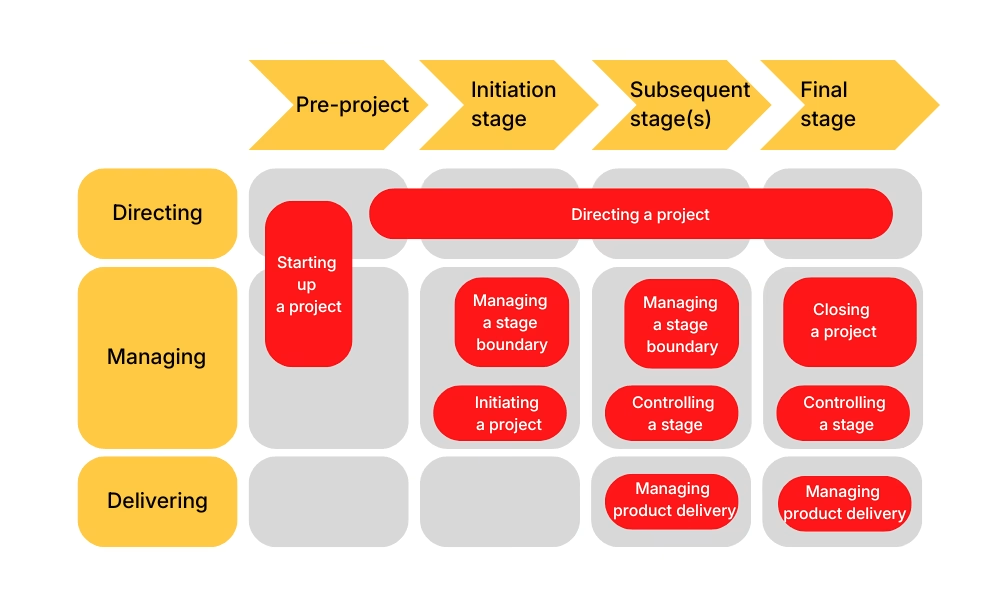
Image 1. Process of project with PRINCE2
So, if your budget is big and must be tightly managed, multiple teams or vendors are involved and need clear roles and responsibilities, regulatory compliance or legal risk needs documented governance, you need clear business case validation before burning development hours, you want to manage risk visibly and escalate early or you need repeatable, scalable project delivery (across markets or product lines), and you feel in bones that your project is not the only software development but more – PRINCE2 is your real prince on the white horse.
So, PRINCE2 as a project management methodology doesn’t mean that developers can’t work in Agile – in fact, product development is just one part of the overall project – PRINCE2 ensures the rest is handled properly, and with a good approach, it will go as painlessly as possible. You can inject Agile specifics while keeping PRINCE2 bones. PRINCE2 helps by saying: “Here’s how we’ll know when we’re done, on time, and on budget, with evidence. Smart AdTech leaders use PRINCE2 & Agile to stage the big picture while still sprinting their way to value.
Ok, now we know what the difference is, so let’s see the practices of PRINCE2, which guide you from top-down analysis to detailed, bottom-up plans.
1. Pre‑project: setting the stage for a project with PRINCE2
Laying the groundwork for success.
Before you write a single line of code, PRINCE2 as project management says: Hold your horses. First, prove that this project is worth doing.
This Pre-project is all about defining the “who”, “what”, “where”, “when”, “why,” and “how” behind your project. It sets the scene and ensures everyone agrees on the intent before any resources are committed. The main purpose of this stage is to make sure that the project is viable, desirable, and achievable.
Start by defining your Business Case and make sure everyone understands the real value of the project. A surprising number of AdTech projects fall short because the team never agrees on what “success” really means. Take the time to analyze the project environment. Identify stakeholders and assess their personal ambitions and interests to understand how they will impact this project. Their perspectives should be included from the start. When you and your team agree on measurable success criteria, you’re aiming for something concrete, like increasing click-through rates by 20%, instead of chasing a vague goal like “improve engagement.”
Step-by-step
Remember, in each step keep in mind the real purpose of this stage – make sure you are doing this at all.
Let’s summarize key activities you should implement:
Define the Business Case: it could be a need, a problem, or an opportunity. Answer the question: Why are you building this? (Ekhm, “Our competitors are doing it” is not a valid Business Case).
Identify the stakeholders within the project environment: who’s in charge? Who signs the checks? Who will love or hate the project outcomes? Keep focus on formal and informal relationships that may impact the project. Divide them into decision-makers, benefits-focused, and tech/delivery reps. How do they interact with each other?
Draft a Project Brief: define thescope, expected ROI, needs and expectations, blockers, risks, and constraints (budget, time, people).
Develop a set of Critical Success Factors (CSF) for the strategic objectives.
Define the structure of management. Appoint the Project Board: yes, you need a board. Even if it’s a single person.
Compare building vs. buying.
Estimate the TCO (Total Cost of Ownership).
Align the project with their long-term digital strategy (and make sure it fits).
Remember this stage starts with the Project Mandate document and ends with the Project Brief..
Think of this as your royal proclamation: “Will this AdTech magic even be worth the gold?” If not, cancel it before it costs more than castle renovations.
2. Initiation: blueprinting the future of project with PRINCE2
Now you’re not just dreaming. You’re planning to plan.
Once you know where you’re headed, you need a plan that gets you there without detours. Teams often get blindsided by risks or compliance issues that could have been spotted early. Based on the Project Brief created in the Pre-project phase, you now develop the Project Initiation Documentation (PID). Spell out what you’re doing, why, and how. As you plan, think through what could go wrong, from tech hiccups to privacy complaints or vendor delays, and decide how you’ll handle each scenario. Communication is everything, so decide how you’ll keep everyone in the loop to avoid last-minute surprises.
To lay a solid foundation for the project so that everyone knows what we’re doing, why, how, who’s responsible, how much it’ll cost, and how success will be measured.
Check-list to do:
Create a comprehensive Project Initiation Document (PID), including, work breakdown structure, the project plan, risk register, quality criteria (e.g., 99.9% uptime for an ad server), timeline, budget (and cost tolerance), management structure (who reports to whom, and how), and communication plan (who needs to know, when and how). Axelos Global Best Practice highlights the PID as the project’s “contract,” ensuring all parties agree on scope and deliverables.
You drafted a Business Case in the Pre-Project phase – now, turn it into a defendable document. Clarify benefits, risks, and costs, ROI expectations, and how and when you will prove its worth.
Set up project control: plan the reporting rhythm, the change management process, and the escalation path if something goes sideways.
Define risk, quality, and configuration strategies, and explain how you will identify and manage risks. How do you prove that deliverables are good enough? How will you manage versions, assets, and documentation?
You don’t plan the whole project in extreme detail – just the next delivery stage.
3. Direction: the project board’s role in PRINCE2
Time to get serious.
Now it’s time to lock in the details and make sure everyone knows their role. PRINCE2’s principle of “management by exception” allows the Project Board to focus on strategic decisions while empowering the project manager to handle day-to-day tasks. The Project Board reviews progress, approves stage plans, and resolves escalated issues, such as budget adjustments for additional features. The Project Board is like the Avengers of your project – they make decisions and keep things on track. They say “Go” or “Nope” at each stage gate.
This stage actually runs from start to finish of the project – it’s like a background process rather than a standalone “phase.”
Key points
To provide strategic oversight and decision-making throughout the project, you should:
Define the project organization structure and responsibility assignment matrix (you can crash it with RASCI): who’s accountable for what, and how the work is governed. ,
Review the stage plan prepared by the PM.
Set up quality management (no cowboy coding, please).
The Project Board:
Authorizes the initiation: they review the Project Brief and Initiation documentation and say: approved – not yet – needs work.
Authorize each stage: reviews progress, approves the next stage plan, and releases resources (or tightens the purse strings).
Provides ad-hoc direction: if a change request, major risk, or unexpected issue arises, the board decides to approve it / reject it / delay it or shut it down. They don’t micromanage – they make strategic decisions.
Confirms project closure: they approve the end project report, ensure lessons learned are captured, and formally close the project.
And who is on the Project Board? The Project Board includes key roles: the Executive (representing business value), User Representative (representing the users’ perspective), and Supplier Representative (representing those delivering the work). They speak for the business, the users, and the makers.
4. Execution & control: making the magic in project with PRINCE2
Let’s build the thing.
While the Project Board directs from above, the Project Manager steers the team, tracking progress, slaying risks, and keeping everything just controlled enough to avoid chaos (but flexible enough to still deliver). This is the day-to-day management of the project – making sure things don’t go off the rails.
However, it’s easy to lose focus once the project is rolling. Scope creep is a common problem where your project keeps growing with new requests. Missed deadlines and confusion about who’s doing what can derail even the best teams. To avoid this, make sure every task has a clear owner, and everyone knows their responsibilities. Managing scope, time, and budget means breaking work into stages, reviewing progress regularly, and adjusting as needed. When changes come up, handle requests carefully. Only escalate big issues, and don’t let small changes derail your timeline. Transparency is key, so use dashboards and regular check-ins to keep everyone aligned. Keeping everyone moving in the same direction depends on good stakeholder management.
Remember, you’re not just managing tasks – you’re managing deliverables.
How to handle it?
Define what needs to be delivered (not just what needs to be done).
Assign Team Managers to handle each component.
Assign tasks to development teams with clear deadlines and quality criteria. It’s Project Manager’s work to assign work, monitor progress, handle issues, and report status. Team Managers accept and deliver work packages to spec.
Use work packages (eg tools like Jira or Asana) to track milestones, such as completing the beta version of a targeting algorithm
Address issues promptly to stay on schedule.
Conduct rigorous testing, such as A/B testing or load testing servers, to meet quality standards.
Involve User Representatives in User Acceptance Testing (UAT) to ensure the product meets expectations.
Provide documentation, training, and support for the delivered software.
It’s the project rodeo: keep one hand on the scope, the other on the budget, and don’t let go when stakeholders start yelling about “just one more feature.”
5. Boundaries: checkpoint, adapt, continue in a project with PRINCE2
No panic. Pause, reflect, plan next
This stage is managed by the Project Manager, but it’s all about preparing the Project Board for confident decision-making.
Review progress and plan the next stage, ensuring continued alignment. Assess completed work against the stage plan. Update the project plan for the next phase. Manage issues and changes. Reassess risks, report to the Project Board, adjust plans if needed.
This is where your planning pays off – or falls apart. Projects can launch with bugs, poor data, or compliance gaps that hurt results. Keep an eye on performance using analytics so you can spot issues early and fix them fast. Double-check compliance to make sure all data handling is legal and ethical. And don’t forget to keep a record of changes and outcomes for future reference. PRINCE2 project management will let you do it.
Lesson learned
And at the end of each stage, you stop and review:
Did we deliver what we promised? The Project Manager prepares stage-end reports, performance metrics, issues encountered and how they were handled and risk lop update.
Did we stay on budget? (no comment here needed)
Is our Business Case still valid? Here is a space for updates of the Business Case, the risk, quality and configuration strategies.
What did we learn? What should we do differently next time? The Project Manager creates a detailed plan (with estimated costs, timelines, risks, and resource needs) for the next stage. The Board can authorize it, request changes or (in extreme cases) pull the plug if ROI is no longer justifiable.
Create the next stage plan (how you’ll deliver the project outcomes in the next chunk), and submit it to the Project Board for approval.
Before launch, test everything thoroughly. Running quality assurance on campaigns, integrations, and data flows is vital.
Every stage is a pit stop – refuel, update route, or call in the cavalry if needed.
6. Closing: deliver, celebrate, archive a project with PRINCE2
The final bow.
Time to wrap it up – but not just with a “done” stamp. Don’t just move on to the next thing. Take time to finish strong. Many teams miss out on learning and future improvements by skipping the project close. When your project wraps up, measure your results and ask yourself if you hit your goals. If not, dig into why. Capture lessons learned by reflecting on what worked and what didn’t, and share these insights with your team. Make sure someone owns the project after launch so nothing falls through the cracks. Ensure the ROI is real, users onboard, and support is ready.
You want to celebrate success, capture lessons, and hand over the solution to the client. Confirm that the product meets the acceptance criteria and all user stories or requirements are fulfilled (or officially dropped).
Here, the Project Manager prepares a Project Closure Report covering:
Performance vs original plan (cost, time, quality)
Highlights and hiccups
Lesson learned (don’t skip it)
Feedback from users, team, stakeholders
Release the team and… bask in the glory! Pop the champagne – your AdTech beast is tame, delivered, and ready to roar into campaigns.
Best practices for AdTech project with PRINCE2
Managing Adtech projects doesn’t have to feel like chaos. With PRINCE2 project management, you get a proven roadmap to guide you from the first idea to final results. Start with a clear plan, keep your team aligned, and use the right tools for the job. Now, every decision maps back to ROI, relevance, and results – perfect for keeping CMOs happy and CFOs on board. With built-in risk and issue management, you’re prepared for tech hiccups, privacy curveballs, and platform updates from… you know who (cough Meta).
PRINCE2 project management isn’t about bureaucracy. It’s about structure, clarity, and delivering value – especially when you’re building something as complex as an AdTech platform.
Need a PRINCE2 playbook tailored for your AdTech roadmap? Just ask – we speak both project management and JavaScript.
For your convenience, see PRINCE2 project management templates: here and here. Curious how we handle projects from tech perspective? See our way.
–
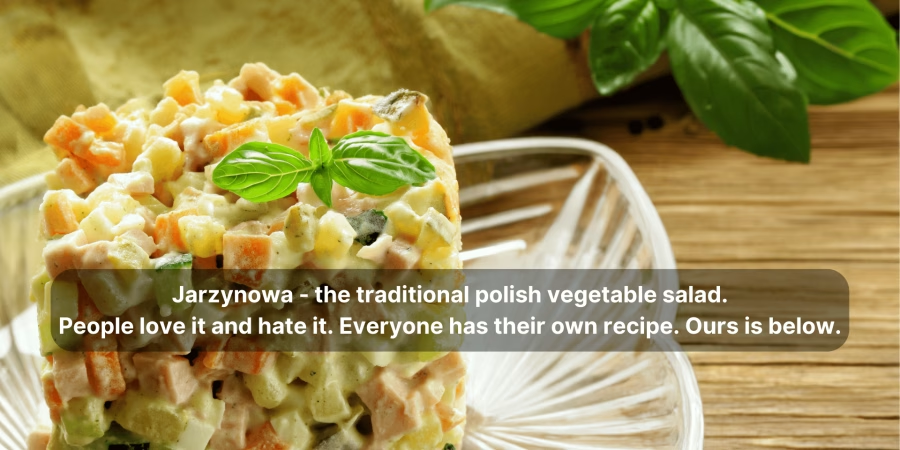
And now… jarzynowa salad – the architecture of a legend
Traditional polish vegetable salad recipe. Half the population loves it, half hates it. Because even a Jarzynowa salad needs perfect project management (unless you want mayonnaise soup instead of salad).
Ingredients:
2 cooked carrots
1 cooked parsley
4 eggs (Hard boil the eggs (approx. 5-6 minutes after the water starts boiling)
3 pickled cucumbers
1/4 onion
1/2 apple
1 small can of green peas
approx. 1 cup mayonnaise
1 teaspoon mustard
a piece of cooked celery
salt, pepper
Dice the carrots, parsley, eggs, and onion. Separately cube the cucumbers and apple – mix them immediately, as the cucumber juice prevents the apples from oxidizing.
Combine with the remaining vegetables and add green peas, mustard, and mayonnaise. Regarding the mayo: add it at your discretion. Some prefer a light touch, others prefer the vegetables to be submerged. Season with salt and pepper. Voilà!
Appx. 1. My mother used broth – cooked vegetables, though purists consider that barbaric. You may choose to cook the carrots, parsley, and celery specifically for this build. However, adding boiled potatoes is where I draw the line – that is true culinary savagery.
Appx. 2. Personally, I don’t touch the stuff. I’m allergic to mayonnaise.
Appx. 3. The pronunciation of “sałatka jarzynowa” is sth like: sah-WAT-kah yah-zhi-NOH-vah.